
A package that fits your business beats a bigger checklist. SEO packages should reflect your goals, website, competition and the work needed to attract qualified leads, not just promise a fixed number of keywords or backlinks. For an Australian trades business, that might mean improving service and location pages first, while an online retailer may need a broader focus on content and technical performance.
It’s reasonable to want clear inclusions, useful reporting and a realistic view of what your investment can achieve. The price depends on your circumstances and is provided after a quote request, with factors such as scope, competition and website size shaping the cost. This guide explains what SEO packages can include, how to compare pricing and reporting, and how to assess link-building quality and risks. You’ll also learn what to look for in a strategy review and how to judge whether the work is contributing to business goals, not just adding activity to a monthly checklist.
Key Takeaways
- Compare the actual work behind each package, not just its keyword or backlink totals.
- Use monthly reports to connect SEO activity with useful outcomes, such as relevant enquiries and leads.
- Assess links for relevance and quality; a large promised backlink count can be a warning sign.
- Choose a standard package or a tailored approach based on your website, competition and business goals.
- Look for a clear plan, meaningful reporting and practical next steps that support your growth.
Monthly reporting and performance tracking
A useful SEO report links completed work with search visibility, organic enquiries and your business goals. Review the figures alongside the actions taken, then use them to set priorities for the next stage of your SEO strategy.
To see how package deliverables relate to investment and return, watch this video:
Keyword Reporting and Content Strategy
Keyword reporting shows which searches bring people to your website and which pages earn visibility on Google. Look beyond a keyword’s position: compare the search intent with the page, then check whether visitors take a useful next step, such as viewing a service page or making an enquiry. For example, a trades business could prioritise content about a specific service if that page attracts relevant organic visits.
Use those findings to guide content updates, not simply add more keywords to a spreadsheet. A shift in impressions without enquiries may point to a mismatch between the search and the page. A reporting review should identify the page, the audience need and the next content action. This gives your SEO strategy a practical direction tied to business goals.
Ongoing Reporting and Communication
Formal SEO reports are typically delivered monthly, while strategy review meetings are often held monthly or quarterly. Use each update to connect completed work with changes in traffic, enquiries and technical performance. Ask what the next priority is, who owns it and how progress will be assessed. That turns reporting into a decision-making tool, not just a record of tasks.
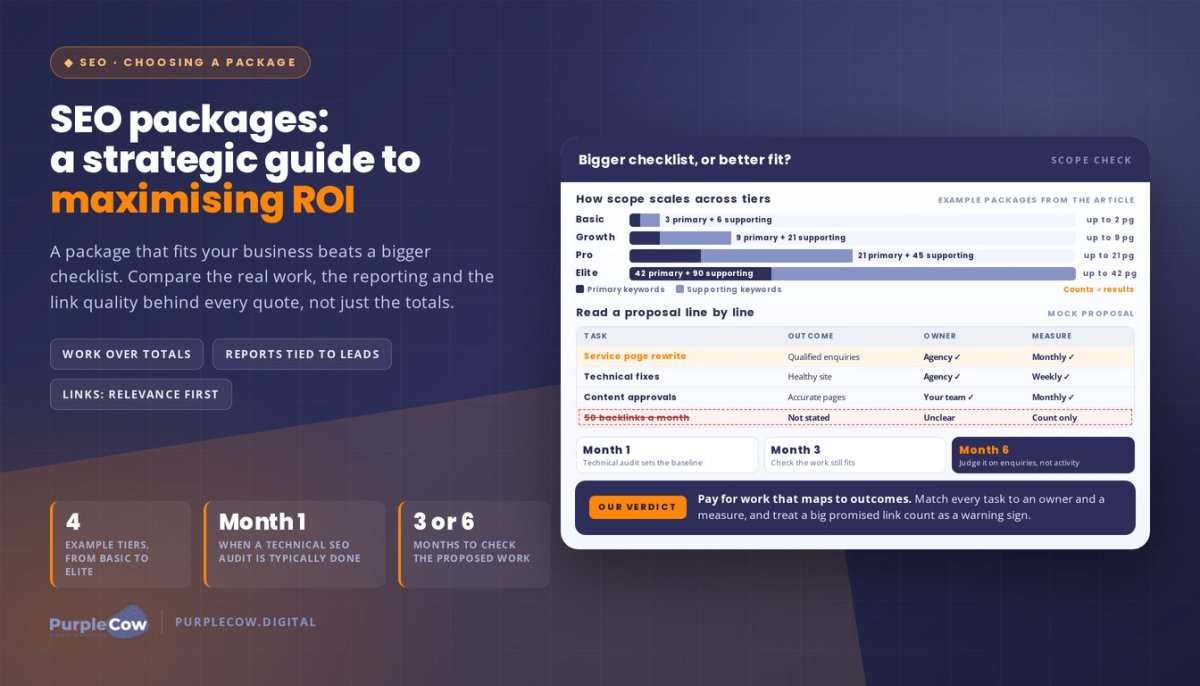
Check the proposed work at month three or month six. These checkpoints help you assess whether activity still fits your goals, current website and earlier results. In a B2B example, organic leads increased by 7 per month after six months of SEO. Treat that as an example, not a forecast for your business: market, site condition and execution all affect outcomes.
For local businesses, connect reporting to the areas and services you want to be found for. A useful local SEO strategy can help frame which location pages and search visibility to review. Track relevant enquiries alongside rankings, because a position change matters most when it supports a real business objective.
At the start of an engagement, a technical SEO audit is typically performed in Month 1. Monthly reporting can then show which issues were addressed and what remains on the work plan. Ask which activities should have the greatest impact in the first 90 days, and compare that plan with the next report. Clear actions, accountable owners and a regular review cadence make ongoing management easier to assess.
Backlink quality and link-building risks
Backlinks are links from other websites to yours. They can support search visibility, but a raw link count says little about relevance, context or editorial value. Assess each link as part of off-page optimisation: work done outside your website to build its authority and recognition.
Start with a sample of referring websites and ask what makes each link appropriate. A link from a relevant Australian industry publication may make more sense for a trades business than one from an unrelated site. Check whether the linking page has a clear purpose, useful content and a natural reason to reference your business. The surrounding text matters too: a link in a genuine discussion differs from one inserted into a page built only to host links.
Be cautious of promises focused on volume, such as a set number of backlinks each month without a clear explanation of relevance or acquisition methods. Ask about the planned activity, examples of suitable placements and how earned links will be recorded. A transparent approach explains what the team controls, what depends on editorial decisions, and how it will respond if a link disappears or appears on a low-quality page.
Review backlink history before adding more links. A practical assessment groups referring domains by topic, location, page quality and link context. It also looks for repeated patterns, such as many links using identical commercial wording or appearing on unrelated websites. Those patterns deserve investigation, but they don’t replace understanding how each link was obtained. Technical SEO can support the wider plan by identifying site issues, but it can’t make an irrelevant backlink useful.
For an Australian business serving a local market, citations are another part of off-page work. These are business details published in directories or local listings. Compare the business name, address and phone number across each listing, then correct inconsistencies. For example, an outdated phone number in a directory can confuse prospective customers even if the website itself is accurate. Treat citation building as a way to keep business information accurate, not a contest to submit your details everywhere.
Content can earn links when it gives another publisher a sound reason to reference your business. A useful service guide, original project explanation or clear answer to a customer question may provide that reason. Link building and content creation should therefore share a plan: identify the audience, publish something genuinely useful, then pursue relevant editorial opportunities. Avoid creating pages solely to attract links if they don’t serve readers.
Before approving a link-building plan, compare its proposed sources with your audience and market. Ask for a clear explanation of link quality, placement context and reporting. This gives you a firmer basis for judging whether backlinks support sustainable search visibility and business success, rather than simply inflating a monthly deliverables count.
SEO package pricing and value comparisons
Compare the work, contract terms and business outcomes behind each quote, not just its package label. In Australia, the right budget depends on your website, competition and growth priorities.
Package Tiers and Pricing Models
Basic packages usually focus on essentials, such as keyword research and key page optimisation. Standard plans may cover broader content and technical work, while premium plans can address more complex sites, markets or authority-building needs. These labels aren’t consistent across providers, so compare deliverables and how they relate to your goals.
Monthly retainers are one model, but project-based SEO and hourly consulting are also options. A project can suit a defined task, such as a site migration review; consulting can help a team that needs strategic guidance. Fixed-term plans set an agreed period of work, so understand the commitment and exit terms before signing.
Monthly Costs and Setup Fees
How much do SEO packages cost in Australia per month? There isn’t one useful figure for every business: scope, website size, competition and required work shape the quote. Pricing for an SEO engagement is provided after a quote request, with those factors determining the proposed scope.
Ask whether onboarding, keyword research and an initial technical review are included or charged as a setup fee. A separate fee should have a defined purpose and deliverable, such as an audit or baseline measurement. Check whether monthly fees include content production, implementation, reporting and consultation, or only recommendations.
Pricing Factors and Package Value
What affects the price of an SEO package? Competition, website size, technical condition, content needs, target locations and the authority your market requires all affect the workload. Local search for one service area differs from a national campaign with multiple service pages and stronger competitors.
Are SEO packages suitable for small businesses and startups in Australia? They can be, when the scope matches your capacity, target market and ability to act on recommendations. Compare the expected tasks with your business goals, not simply the lowest quote. SEO takes time to build, so no package should promise a first-page Google ranking in a set period.
Questions Before Buying a Package
What should you ask before buying? Ask which work is included, who implements changes, how keyword research guides priorities, and how progress will be reported. Request a clear explanation of any setup fee, fixed term, renewal process and cancellation conditions.
What results should you expect, and how long does SEO take to show results in Australia? Timing depends on your starting position, competition, technical requirements and content needs. Ask which activities matter most early, then agree on how progress will connect to enquiries, visibility and revenue goals.
Compare two proposals line by line: match each task to an outcome, owner and reporting measure. This practical check reveals whether the investment supports your marketing priorities, rather than paying for a long list of disconnected activities.
Looking for Custom SEO Packages?
A fixed package can make the scope easier to understand, while a custom plan can target a specific gap. Compare both with your priorities, the regions you serve across Australia and your capacity to act on recommendations.
Packages and Custom SEO Services
A standard package groups recurring tasks into a defined scope, which can suit a business with clear, steady needs. Custom SEO services start with your website, audience and goals, then shape the work around them. For example, digital agencies like Cloud Tech Digital often focus on tailored lead generation and service-area pages for trades businesses, while a national supplier may need broader content and technical work.
Some agencies offer three or four packages, then present prospective clients with one or two options. That can simplify selection, but the label matters less than the work included. Compare the proposed keywords, pages, implementation responsibilities and reporting with your business priorities before deciding.
Exclusions and Add-On Services
Read the exclusions as carefully as the inclusions. A package may limit content production, technical implementation, website changes or the number of pages covered. If a recommendation requires work outside the scope, clarify how it will be handled and who is responsible for delivery.
Add-ons can extend a plan when a specific need falls outside its core work. Examples include creating a new service guide, resolving technical issues or expanding content for another region. Treat each extra as a separate task with a defined outcome, owner and place in the SEO plan, rather than assuming it’s included.
Keyword Tracking and Service Regions
Keyword tracking should reflect the searches your customers use and the places you serve. A business targeting local SEO can distinguish searches for a service within its coverage area from broader, non-local terms. Review which locations and keywords are covered, how relevant landing pages support them, and whether the tracking helps assess enquiries from your target market.
Geography changes the work. A single-location business may need focused pages and local relevance, while a company serving multiple regions needs distinct location coverage. Ask how the plan handles overlapping service areas and whether keyword priorities connect to actual services, not just search volume.
No-Contract Service Options
No-contract SEO services generally mean you aren’t tied to a long fixed term; the work may instead run month to month or around a defined project. Flexible terms can be especially useful at the start, when both sides are establishing priorities and working rhythms.
Flexibility still needs a clear scope. Before starting, understand notice requirements, billing periods, access to reports and what happens to unfinished work if the engagement ends. A practical plan should also explain how progress will be reviewed, so you can make informed decisions rather than renewing automatically without assessing the work.
Use a simple comparison: list your goals, mark each proposal’s inclusions and exclusions, then identify the gaps. This shows whether a defined package or tailored approach better fits your business today, while leaving room to adjust as your services and target regions change.
What SEO packages include
A useful package defines the work, its limits and how each activity supports your digital goals. Compare the deliverables with the pages, search terms and technical needs your campaign must address.
Included SEO Services
Search engine optimisation commonly combines keyword research, on-page improvements, technical checks, content recommendations and performance tracking. The mix should match your website’s needs. For example, an established service page may need clearer alignment with search intent, while a new page may need content and technical preparation before it attracts relevant traffic.
Package examples show how deliverables can scale with scope. A Basic plan may target 3 primary keywords and 6 supporting keywords across up to 2 SEO pages. A Growth plan may cover 9 primary keywords, 21 supporting keywords and up to 9 pages. These counts describe example package structures, not a measure of likely results.
Broader examples include a Pro plan with 21 primary keywords, 45 supporting keywords and up to 21 pages. An Elite plan may cover 42 primary keywords, 90 supporting keywords and up to 42 pages. Some packages also specify 2-4 blog posts per month, while technical health may receive weekly checks after the initial audit.
Read beyond the totals. Check whether the package includes implementation or only recommendations, and whether content writing, page optimisation and technical fixes are part of the agreed work. A list of keywords alone doesn’t show whether the pages match customer intent or support enquiries.
Package Pricing and Inclusions
Package prices reflect the time, expertise and work required for the agreed scope. Compare what each fee covers: keyword research, content, technical tasks, page limits, reporting and communication. A lower-priced plan with few included actions may not address the main barriers to visibility or qualified traffic.
Ask how the team prioritises tasks when the website needs more work than the package covers. For instance, if a campaign includes content recommendations but excludes writing, clarify who will create and publish the material. Confirm how additional work is scoped, approved and reported, so the total commitment remains clear.
Use a simple comparison before choosing: match every deliverable to a page, audience need or technical issue. Then identify exclusions and ownership. This makes it easier to assess whether the package supports business goals, rather than paying for a large number of deliverables without a clear purpose.
Compare the scope of your SEO work with your business goals.
PurpleCow Digital: Website Design
PurpleCow Digital can help when your website needs to support both search visibility and customer enquiries. If your current pages are difficult to navigate, slow to adapt as your services grow or poorly aligned with what customers need, Website Design can provide a clearer foundation for your digital presence.
We can bring Website Design together with Search Engine Optimisation, so your site structure and content support the searches that matter to your business. Website Maintenance can help keep your site updated, while Meta Ads can complement organic activity when you want to reach customers through paid campaigns. The right next step depends on your website, priorities and existing marketing activity.
Get in touch with PurpleCow Digital to discuss your website and search goals.
Turn Your SEO Plan Into the Next Step
The strongest next move is one your business can sustain. Use the priorities you’ve identified to choose a practical starting point, assign responsibility for implementation and decide how you’ll assess progress. A focused plan can help you avoid scattered tasks and keep your marketing connected to the customers you want to reach.
SEO packages should fit the work your website needs now, while leaving room to adapt as your services, customers and goals change. If your site needs a stronger foundation, PurpleCow Digital can help with Website Design, Search Engine Optimisation and Website Maintenance. Start with the business outcome you want to improve, then shape the work around it.
Make a clear decision, learn from the results and build momentum at a pace that works for your business.
Frequently Asked Questions
Are SEO services worth the investment?
They can be worthwhile when the value of new customers can support the time and money invested. Consider your average sale value, profit margin and how often customers return, rather than judging success by visits alone. For example, a trades business may value a smaller number of qualified enquiries more than a surge in visits from people outside its service area. Tie your decision to commercial outcomes.
How much does SEO cost in Australia?
The price depends on the work required and is provided after a quote request. To plan a workable budget, account for more than the agency fee: your team may also need time to approve content, provide service details or coordinate website changes. Set a budget your business can sustain, then decide which outcomes matter most within it. That creates a clearer basis for discussing the scope.
Can low-cost SEO work carry risks?
Low-cost work can be a poor fit if it relies on generic recommendations that don’t reflect your customers or business. Check whether the proposed work recognises your actual services, sales process and customer questions. For instance, a plan focused on broad informational content may miss the specific details prospective customers need before enquiring. As strategic agencies like Stratagon often emphasize, marketing campaigns must closely align with customer journeys and sales processes to generate meaningful revenue. Ask how the work will connect to the way your business wins customers.
Are there lock-in contracts?
Some agreements run for a fixed term, while others offer ongoing arrangements. Before agreeing, check when the service begins, how renewal works and what you’ll receive if the relationship ends. A clear written agreement helps you plan around staff changes, budget cycles and other business commitments. Make sure you understand the practical steps for ending or changing the arrangement, not just its headline term.
Can my package change over time?
Yes. Your priorities may shift as services change, demand varies or your business expands into new areas. A seasonal business, for example, might need its website to prioritise different services at different times of year. Review whether planned work still supports current sales priorities, and agree how adjustments will be approved. This helps keep activity relevant instead of continuing tasks that no longer fit.
What does ongoing SEO usually cost?
The cost depends on the agreed scope, and a quote request is the route to a case-specific price. For budgeting, separate ongoing activity from one-off work, such as a website migration or a major content project. Also consider whether your team can handle approvals and website updates. These details help you plan the full commitment, rather than viewing a recurring fee in isolation.
How does SEO work?
SEO helps search engines understand your website and helps potential customers find relevant pages. A typical workflow moves from understanding your services and audience to improving pages and reviewing how people find and use them. For example, a business can use common customer questions to shape a service page that clearly explains its process. Useful information and a straightforward next step make that page more helpful to visitors.
How do you choose the right SEO plan for your budget?
Set a comfortable spending limit first, then choose one business priority to address. If your team has limited time, favour work that supports a key service or improves an important customer journey. Check that the proposed tasks fit your budget and internal capacity. A focused plan gives you a manageable starting point, with room to revisit priorities as your business needs develop.

Article by
Angie Neal
Angie Neal is the founder and CEO of PurpleCow Digital, a full-service digital marketing agency based on Queensland's Redcliffe Peninsula. With deep expertise in SEO and web design, as well as a certification as a GoHighLevel Admin. Angie helps small-to-medium businesses build scalable growth systems through AI-powered automations, CRM workflows, and smart digital strategy. She's also passionate about building a community of like-minded agency owners at the After Party — sharing insights, solving real problems, and helping others grow. Whether it's search visibility, lead management, or end-to-end automation — Angie's focus is always on helping businesses scale sustainably.
Disclaimer
This page may contain affiliate links. If you sign up for software through our links, we may earn a commission at no extra cost to you. We only recommend tools we use and trust – software that is the backbone of our agency.