
What if a customer gets an answer from AI-powered search without ever seeing your business in a familiar list of results? These tools can summarise information and cite sources, so your business needs to be clear enough to understand and credible enough to reference. AI Search Optimisation builds on search engine optimisation (SEO), it doesn’t replace its foundations.
You don’t need a new set of technical tricks to get started. For most Australian small businesses, the practical first steps are to make services, service areas and expertise consistent across your website and business profiles, then publish useful answers to real customer questions. Google’s AI Overviews are active in Australian search results, but there’s no reliable shortcut to being cited.
This checklist explains how AI-assisted discovery differs from a traditional results page and helps you prioritise improvements to your website, content and Google Business Profile. For example, a plumbing business could explain which hot water systems it services, where it works and what customers should prepare before making an enquiry. You’ll also learn how to track meaningful progress, such as relevant enquiries and search visibility, without chasing vanity metrics. The aim is to make your business easier for people and search systems to understand, and connect SEO work to business goals.
Key Takeaways
- Keep your business details accurate and consistent across your website and business profiles so they’re easier to interpret.
- AI Search Optimisation builds on SEO foundations. Clear content and an accessible website support both traditional and AI-assisted discovery.
- Answer customer questions usefully, and make each claim specific, verifiable and up to date.
- Prioritise key service pages, then measure relevant enquiries and visibility rather than relying on vanity metrics.
- Connect SEO, content and website improvements to business goals. Search visibility is long-term work, not a quick fix.
What Is AI Search Optimisation, and Why Should Your Business Care?
AI Search Optimisation means making accurate, useful business information easier for AI-assisted search to interpret. Instead of showing only a conventional list of links, an AI search feature may summarise information from different sources and cite some of them. The format, sources and experience vary between platforms, so there’s no single formula that will secure a mention.
For an overview of how this kind of search is being discussed, watch this video from Surfer Academy:
Think of AI-assisted answers as another way for people to discover information, not a replacement for search engine optimisation (SEO). Helpful content and a technically accessible website can support both, but AI systems decide what to retrieve and cite. Focus on making your business information clear and useful, not on chasing a mention at any cost.
What does AI search optimisation include?
Start with a clear business identity: who you are, what services you provide and what evidence supports your claims. Useful service pages and explanations give people and search systems context. These elements work together; an isolated technical tweak can’t make up for unclear or inconsistent information.
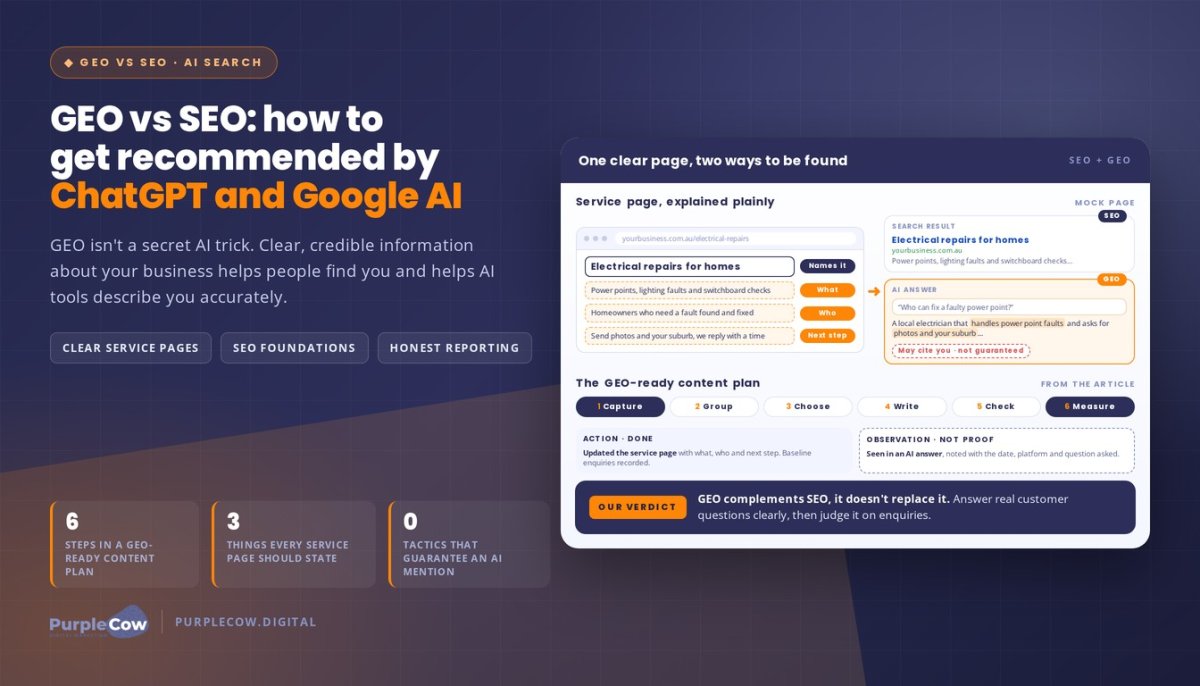
Generative engine optimisation (GEO) describes work intended to improve how content appears in generative AI responses. Answer engine optimisation (AEO) focuses on making content useful for systems that provide direct answers. The terms overlap, and both sit alongside established SEO. For a broad definition, see Generative Engine Optimization (GEO). Terminology and platform practices are still evolving, so focus on the principle behind them: publish information that’s accurate, understandable and worth citing.
Why does AI search matter to service businesses?
A potential customer may ask a complete question rather than type a few keywords: “Which electrician can install an induction cooktop and explain what needs to be checked first?” That question calls for relevant services and useful detail, not a page that repeats “electrician” several times.
Hypothetical Australian example: An electrical business could explain the installation work it offers, outline what affects a job and say what information to include in an enquiry. Someone looking for help can then assess whether the business fits their needs. A local service business can also connect clear website information with its broader AI approach to local business discovery.
The practical goal is to help the right people find and verify correct information about your business. Keep claims substantiated and current, then build visibility through useful pages and sound SEO foundations. A citation can be one signal to observe, but relevant enquiries and business outcomes matter more than mentions alone.
How AI Search Tools Discover, Interpret, and Cite Business Information
AI search tools can draw on content available across the web, but their methods and answer formats differ. Some may retrieve relevant pages, interpret useful passages and cite sources in a generated response. Others may present information differently, and no single website change will secure a citation.
That makes clear business information essential. A person comparing providers should be able to tell who you are, what you do and whether your claims are supported. Consistency also helps search systems interpret those details without having to reconcile conflicting descriptions.
Clear, consistent facts make your business easier for people to understand and for machines to interpret. That’s the practical foundation of AI Search Optimisation, not a trick for forcing your way into an answer.
Make your business and services easy to identify
Start with the basics. Use the same business name, service descriptions and contact details across your website and business profiles. Explain your services in plain language, and use the same terms wherever the facts are the same. If a service has a specific scope, describe it rather than relying on broad labels.
Each service page should explain who the service is for, the problem it addresses, how the process works and what evidence supports your claims. For example, an electrician’s page could explain that the business handles switchboard upgrades, describe the steps involved and clarify what information to include in an enquiry. Keep details factual and don’t promise outcomes you can’t substantiate.
If you serve customers in defined areas, accurate location and service information helps people assess whether you’re relevant to them. Clear local SEO foundations can make those details easier to find and understand.
Give useful content a clear structure
Organise each page around real customer questions. Use descriptive headings, answer the main question directly, then add the detail a reader needs to act. A plumbing service page, for instance, could explain what the service covers, what may affect the work and how to make an enquiry. Avoid padding it with repeated keywords.
Schema.org markup, often called structured data, labels information on a page so software can interpret its context. It can identify details such as a business name or service, but it doesn’t replace accurate visible content or ensure a platform includes or cites your page. Treat it as supporting context, not a shortcut.
Before publishing markup, check that it matches the information people can see on the page and that it’s implemented correctly. For claims that need evidence, link to credible sources and distinguish verifiable facts from your advice or opinion. Review the page whenever the service, process or business details change.
If you want a clearer plan for aligning your website information with your business goals, talk with our team about your SEO and website strategy.
AI Search Optimisation vs SEO: What Changes, and What Should You Measure?
AI-assisted search changes how some people encounter information, but it doesn’t make SEO obsolete. Conventional search often presents links for people to choose from, while AI features may summarise information and cite sources. Both depend on useful, accessible content, and neither ensures a visit or enquiry.
Use this comparison to separate what’s changing from the foundations that still matter:
- User experience: Traditional search commonly offers a results page of links. AI-assisted search may put a generated response first, with citations or links depending on the platform and query.
- Content needs: SEO content should meet the searcher’s needs and explain a topic clearly. For AI discovery, direct answers and well-organised supporting detail can also make relevant information easier to interpret.
- Visibility signals: SEO reporting can show impressions, clicks and rankings in available tools. AI citations or mentions may be visible in some answers, but there isn’t one consistent measure across platforms.
- Practical measurement: Track website visits, enquiries and relevant search performance. Treat manual checks of AI answers as observations, not a complete record of visibility.
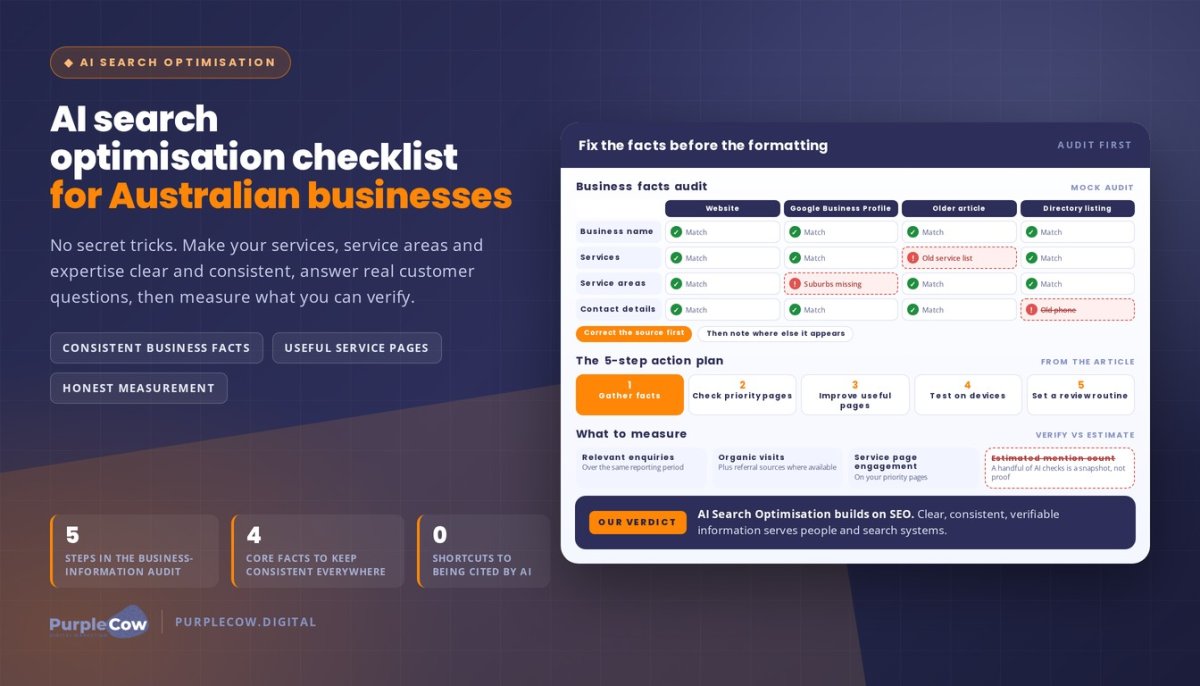
No single metric proves AI visibility or predicts leads, rankings or revenue. Referral visits can be measured when the data is available. An estimated mention count based on a handful of searches isn’t a complete measure of how often people see your business.
Which SEO foundations still matter?
Keep your pages accessible to search engines, your site structure easy to follow and your content genuinely useful. Build authority by demonstrating expertise through accurate information and credible references, rather than relying on unsupported claims or repeated keywords.
SEO remains a long-term strategy, not an overnight visibility switch. Integrated SEO work can connect technical improvements, content and authority-building to organic search goals, while keeping the plan grounded in what your business can maintain.
How can an SME monitor AI-search visibility?
Build a simple tracking routine. Use analytics to review referral sources where the data is available, and record qualified enquiries over the same reporting period. Attribution can be incomplete: a customer may discover you in one place and enquire through another, so don’t assign every lead to AI search.
For a consistent manual check, write down a small set of representative customer questions and the platforms you review. Record the date, wording, platform and whether your business or website is cited. These checks are snapshots, not a full or permanent view. Answers can vary with the question, platform and available sources.
Compare those observations with business measures such as relevant enquiries, organic visits and engagement with priority service pages. Look for patterns over time, and note what changed on your site before interpreting movement. Measure what you can verify, label what you estimate, and use both carefully to guide your next step. If you’d like help connecting search visibility work with business goals, discuss your SEO priorities with us.
How to Optimise Your Website for AI Search: A Practical SME Action Plan
You don’t need to rebuild your website or chase every new AI-search tactic. Start with the business information customers rely on, improve the pages that help them decide, then measure what you can observe. This practical approach strengthens your wider SEO while preparing your site for AI-assisted discovery.
Start with a practical business-information audit
Begin with facts, not formatting. Review your business name, services, service areas, contact details and supporting evidence across your website and business profiles. Correct inconsistencies first, then focus on the pages that influence a customer’s decision, such as your core service pages.
- Gather your current business facts. Write down the approved business name, services, service areas and contact details. Identify who can verify each fact, and leave out claims you can’t substantiate or keep current.
- Check your priority pages. Look for conflicting service descriptions, outdated claims, thin explanations and unanswered customer questions. A page that names a service but doesn’t explain what it covers can leave prospective customers unsure whether it fits their needs.
- Improve the most useful pages first. Add descriptive headings, plain-language answers and supporting detail. For example, a trades business could explain what a particular job involves, what information helps prepare an enquiry and which factors can affect the process. Use examples only when they reflect work the business genuinely does.
- Check the experience on different devices. Make sure key information is readable on mobile, important pages are accessible and your site structure helps visitors move between related content. Technical discoverability remains part of normal SEO, not a separate AI-only project.
- Set a simple review routine. Record which pages you updated and when. Check relevant organic visits, enquiries and any AI-search observations consistently, while treating manual platform checks as snapshots rather than a complete visibility report.
Improve priority pages and review progress
Keep the work focused. Refresh the pages closest to customer decisions before expanding into a large content project. For an Australian business serving a defined area, connect accurate service information with local discovery. Our guide to AI in local SEO explores that connection.
Review your pages whenever services, processes or service areas change. A detail that was accurate last year can become misleading as the business changes. Keep a short record of updates, evidence sources and questions customers still ask, then use it to guide your next review.
First actions: verify your business facts, strengthen your key service pages and track results you can substantiate. These steps support AI Search Optimisation, but they don’t ensure inclusion in an AI-generated answer.
Make improvements you can maintain. Clear information is more useful than a rushed batch of changes, and a steady review habit helps keep your website aligned with how your business actually works.
How PurpleCow Digital Connects AI Search Readiness with SEO and Website Strategy
AI Search Optimisation is most useful when it supports a clear business goal, not when it becomes a checklist of disconnected tactics. At PurpleCow Digital, we bring search strategy, content and website improvements together around what you want your online presence to help customers do.
That starts with understanding how people make decisions about your services. A service page should answer the questions that matter to a potential customer, while related content can help them explore the topic further. Your website should then make it easy to move from that information to a useful next step.
Bring content, SEO, and website foundations together
We connect SEO planning, content and website development so your pages present a consistent picture of your business. That may mean refining a service page, organising related information more clearly or addressing a technical issue that gets in the way of using the site. Each change should have a clear reason tied to your audience and business priorities.
A considered design supports that work. Our website design focuses on responsive, lead-driven websites, with service pages shaped around useful information and clear customer journeys.
Reporting should help you decide what to do next. We review available evidence, such as organic search activity and relevant enquiries, and explain what the data can and can’t tell you. AI citations or estimated visibility scores may add context, but they aren’t proof of business impact on their own.
Choose progress you can sustain
You don’t need to tackle every opportunity at once. We can shape a staged plan around your goals, available resources and the gaps that matter most on your current website. That keeps the work manageable and gives you a clear basis for deciding what deserves attention next.
As your services and priorities change, your website strategy can adapt with them. Review what customers need to understand, maintain the pages that support those decisions and use reliable reporting to guide further improvements. No single tactic can promise a particular citation, ranking, visit or enquiry.
Bring us your business goals and the questions you’re weighing up. We’ll help you turn them into a practical search strategy, without pretending there’s a shortcut to specific results.
Make your next search move count
Choose one customer decision you’d like your website to support more clearly. It could be helping someone understand whether a service fits their needs or making the next step easier to find. Use that goal to guide your next AI Search Optimisation improvement, then decide how you’ll assess whether the change is useful.
Progress doesn’t need to start with a sweeping plan. Pick a focused action, assign responsibility for it and set a point to review what you learn. That gives you a practical way to keep search work connected to real business priorities.
As your understanding grows, refine the plan around what customers ask and what your available data shows. Keep the work grounded in evidence, stay open to adjusting your approach and make each next step count.
Your expertise deserves to be understood. Start with one clear improvement and build from there.
Frequently Asked Questions
Is AI search optimisation the same as SEO?
No. They’re related areas of search work, but they raise different questions during planning. For an Australian service business, SEO planning might review which pages attract relevant searches, while an AI-readiness review could check whether a customer can quickly understand the exact service offered. Keep the findings in one plan, but label each task by its purpose so your team knows what it’s changing and why.
Can AI search tools recommend my business without citing my website?
Yes. If a customer mentions that an AI tool suggested your business, note the platform and what they remember seeing, with their permission. Then check whether the details they recall match your current services and brand information. This feedback can help you spot gaps in how people understand your business, even when it doesn’t provide a clear path back to a particular webpage.
Does adding schema markup guarantee that AI will cite my website?
No. Treat schema as structured website information that needs ongoing quality checks, not as a citation switch. Keep a record of which pages use markup and what information it describes. If a service or business detail changes, include those pages in your update process so outdated structured details don’t linger after the visible copy has been revised.
How long does AI search optimisation take to show results?
There’s no dependable timeframe for a change to appear in an AI-generated answer. Instead of setting a date, use practical milestones you control, such as completing a page review, fixing a technical issue or gathering enough enquiry feedback to assess a change. Note when each action happens and what you observe afterwards. That creates a useful record without confusing completed work with a search result achieved.
What happens if AI search tools use outdated information about my business?
Start by tracing the incorrect detail to its source. Search your site for the wording, then review business profiles, older articles and downloadable documents your team controls. Correct the source and note where else the same detail appears, so you don’t fix one page while leaving another inconsistent. If a customer raises the issue, record the wording they saw to help guide your review.
Is an llms.txt file necessary for AI search optimisation?
No. Don’t make it a priority simply because it appears on a technical checklist. If your developer is considering testing an llms.txt file, first write down the specific question the test is meant to answer and how you’ll assess it. Record the change and its date, and don’t treat a change in visibility as proof that the file caused it.
Can small businesses work on AI search optimisation without publishing more content?
Yes. Everyday customer conversations can reveal useful content opportunities. Review sales enquiries, call notes or common questions your team hears, then identify what your current material doesn’t answer clearly. AI Search Optimisation doesn’t require publishing for volume. Choose a genuine information gap, assign someone to address it and add the answer where customers are most likely to need it.

Article by
Angie Neal
Angie Neal is the founder and CEO of PurpleCow Digital, a full-service digital marketing agency based on Queensland's Redcliffe Peninsula. With deep expertise in SEO and web design, as well as a certification as a GoHighLevel Admin. Angie helps small-to-medium businesses build scalable growth systems through AI-powered automations, CRM workflows, and smart digital strategy. She's also passionate about building a community of like-minded agency owners at the After Party — sharing insights, solving real problems, and helping others grow. Whether it's search visibility, lead management, or end-to-end automation — Angie's focus is always on helping businesses scale sustainably.
Disclaimer
This page may contain affiliate links. If you sign up for software through our links, we may earn a commission at no extra cost to you. We only recommend tools we use and trust – software that is the backbone of our agency.