
Your online reputation can take a hit before you even know there’s a problem. Online Reputation Management isn’t just about replying to reviews. It’s about understanding what people find when they search for your business and responding with a clear plan.
That matters when a potential customer sees an unanswered complaint before they see your work. For example, a tradie might find an old negative review high in Google results, even though the issue has since been resolved. You can’t control every comment, but you can monitor what’s being said and respond professionally.
This guide explains what reputation management involves, how businesses can address harmful or misleading content, and how search results, monitoring and digital tools fit together. You’ll also learn what to consider when choosing an approach, so you can protect trust and help the right information about your business stand out.
Key Takeaways
- Build a steady review process: invite genuine customer feedback and respond to praise and criticism with care.
- Use useful, accurate website content to strengthen the information people see in search results, rather than relying on a quick fix.
- Monitor brand mentions and reviews so you can spot emerging issues and respond with a measured, timely message.
- Separate negative opinions from potentially false or misleading claims, then choose a proportionate response for each.
- Choose monitoring tools around the channels you need to track, the alerts you’ll act on and the reports that help you assess progress.
What is online reputation management?
Online reputation management is the work of shaping what customers see and hear about your business online. It includes inviting genuine feedback, responding publicly and spotting issues before they shape people’s perceptions of your brand.
Review Generation and Customer Responses
Invite customers to leave honest feedback after a completed job, such as a plumbing repair or landscaping project. Keep the request straightforward, and never make an incentive conditional on a positive rating. Respond to each review with a specific, professional message: thank customers for praise, or acknowledge a concern and offer a practical next step.
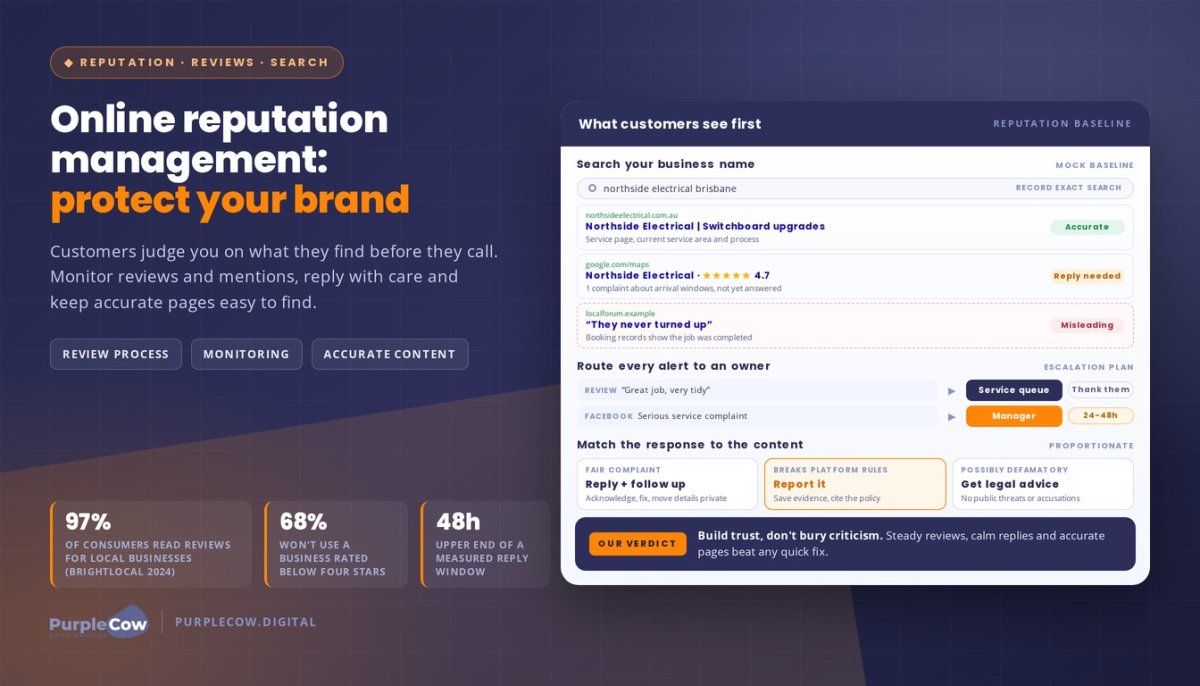
BrightLocal’s 2024 survey found 97% of consumers read online reviews for local businesses. It also found 68% won’t use a business rated below four stars. Those figures make consistent review requests and thoughtful replies worth building into your customer follow-up process.
Feedback and Negative Review Management
Treat negative reviews as public feedback, not an invitation to argue. Check the concern against your service records, acknowledge the issue without sharing private details, and explain how you’ll follow up. If a customer reports a missed appointment, for example, respond calmly and move personal details to a private conversation.
In Australia, consumer protection rules concerning misleading representations and defamation law may be relevant to review practices and disputed claims. Avoid fake reviews, pressure tactics and unsupported accusations. Australia has specialist reputation agencies and broader digital agencies; compare their review processes, reporting, response support and approach to disputed content.
Review and Online Mention Monitoring
Monitoring means tracking reviews and mentions across channels where customers discuss your business, including Google Business Profile and social platforms. Start by noting your current review themes, choosing the channels that matter to your customers, and assigning someone to assess and respond to new feedback.
Australian service-business costs depend on the scope, channels monitored, reporting needs and level of response support. To build a strategy, document your starting reputation, set clear goals, choose monitoring and response processes, then review patterns and adjust. Review removal or search-result suppression can backfire if it hides legitimate criticism or relies on misleading tactics.
Online Reviews and Consumer Behaviour
Reviews help prospective customers decide whether a business seems trustworthy before they enquire. Positive reviews can build confidence, while unanswered negative feedback may leave readers with questions. Look for recurring themes, such as comments about punctuality or communication, and use them to improve the customer experience.
Results depend on your customers, industry and follow-up process, so there’s no reliable timeframe for generating new positive reviews. Track review quality, response patterns and recurring feedback to see whether your approach is building a clearer, more credible public picture.
Suppressing negative search results
A damaging result can shape a customer’s first impression before they reach your website. Only 5% of users look past Google’s first page, so accurate, useful pages that deserve visibility matter. Suppression doesn’t usually erase a negative result. It aims to improve the prominence of relevant positive content, while addressing content that may qualify for removal through the appropriate process.
Start by searching your business name and key variations, such as your trading name, location and service. Note which pages appear, what each says, and whether the content is accurate, outdated or misleading. This creates a baseline for tracking changes. Search results differ between queries, so record the exact search and page rather than relying on a general impression.
Search engine optimisation, or SEO, helps search engines understand and rank useful pages. Practical steps can include improving your website’s service pages, publishing helpful articles and keeping business information accurate. For example, an Australian electrician could publish a clear guide to switchboard upgrades alongside a detailed service page. Search Engine Optimisation supports this work, but no ethical strategy can promise a particular ranking.
Reverse SEO means promoting relevant, positive pages so they may rank above damaging results. It takes sustained effort: create original, genuinely useful content, improve existing pages and earn credible mentions where they fit. Avoid fake profiles, fabricated testimonials and repetitive pages built only to manipulate Google. These tactics can undermine trust and create further reputational problems.
Search results can influence more than customer decisions. 80% of employers search job applicants on Google before inviting them for an interview. For a business, that illustrates why accurate information about its work, people and values should be easy to find. It doesn’t mean every negative result can be removed or displaced.
When content is false, defamatory or unlawful, suppression and removal are different paths. Preserve the page details and assess the nature of the claim before deciding how to respond. Search engines may have processes for certain removal requests, while a search result can also change as relevant pages are updated and indexed. If you’re unsure how to strengthen your search presence, talk with us about your next steps.
Reputation monitoring and issue response
Monitoring turns scattered online mentions into information you can act on. A clear process helps you spot patterns, prioritise urgent concerns and respond consistently across channels.
Reputation Measurement and Monitoring
Measure more than star ratings. Track review volume, recurring themes, response times and sentiment, meaning whether comments are positive, neutral or negative. Compare these measures over time to see whether service changes show up in customer feedback.
For example, an electrician might notice that Google Business Profile comments repeatedly mention unclear arrival windows. That pattern points to a specific operational issue to address, rather than a series of unrelated complaints.
Brand and Keyword Monitoring
Set monitoring terms for your business name, trading names, key staff, products and locations. Include common misspellings and service phrases, such as “emergency plumber Brisbane”, to catch relevant mentions beyond reviews. Social media, news pages and community forums can all shape public perception.
Competitors may appear in comparison posts alongside your business. Monitor those mentions for customer questions and market themes, not to copy another company’s claims. A useful alert should show the source, context and date, so someone can assess the mention before responding.
Continuous Reputation Monitoring
Automated tools can monitor mentions and sentiment across Australia and overseas, then send alerts for critical comments. Some services offer automated monitoring 24/7, but an alert system still needs a person to judge context and decide what action is appropriate.
Create an escalation plan: assign a reviewer, classify the issue, gather relevant facts, then draft a calm response. For a serious service complaint on Facebook, acknowledge the concern publicly and move private details out of the thread. A measured response within 24 to 48 hours can help prevent silence from becoming part of the story.
Use reports to assess whether your response process is working. A monthly review can highlight repeated complaints, missed alerts and changes in sentiment. During a public issue, pause routine posts and coordinate messaging across social media, so customers receive consistent information. Talk through a practical monitoring approach if you need help turning alerts into a clear response process.
Managing negative, misleading or false online content
A damaging post calls for a measured response, not a rushed attempt to bury it. First establish what the content says, where it appears and what outcome could address the issue.
Addressing Damaging Online Content
Distinguish a genuine customer complaint from a misleading claim or potentially false statement. Record the page, publication date and relevant details, then assess the content’s accuracy and likely impact. For example, a service business facing a post about an alleged missed appointment should check its booking records before replying.
Choose a response that fits the issue. A fair complaint may call for a direct, professional reply and service follow-up. A false claim may need a documented platform report or specialist advice. Avoid escalating the situation with public accusations or by revealing private customer information.
Removing Damaging Content
Removal is different from suppression. If content breaches a platform’s rules or appears defamatory, a business can submit a removal request through the relevant platform or search engine process. Keep evidence of the specific statement and explain why it should be reviewed. A request doesn’t guarantee an outcome.
Before taking action, consider whether the material is a customer opinion, a factual claim or private information. Each raises different issues. Avoid threats or mass reporting, which can weaken a credible request and draw more attention to the original post.
Building Credibility Through Content
Accurate, useful content gives customers a clearer picture of how your business works. A local builder, for instance, could explain how a project moves from site assessment to handover, including what customers can expect at each stage. Specific details are more credible than broad claims about being the best.
Keep service pages, staff biographies and business information consistent. An outdated page listing an old service area can confuse customers comparing search results. A planned small business marketing strategy can help organise content around genuine customer questions.
Promoting Positive Content
Promote material that demonstrates genuine expertise, such as project explainers, staff introductions or customer stories shared with permission. Publish it on channels your audience uses, and keep the information accurate. The goal is a useful, balanced presence, not manufactured praise or concealed criticism.
Search visibility depends on relevance and many other factors, so promoting content takes sustained effort. Review which pages appear for your business name and update useful material as your services change. A proactive, truthful strategy helps customers find context alongside difficult or outdated content.
Online reputation management tools
The right digital monitoring tool can turn scattered reviews and mentions into a manageable workflow. It may help you spot issues sooner, but software alone can’t determine what a comment means or how your business should respond.
Start with the channels your customers use. A café might need to track Google reviews, social media comments and mentions of its name. A tool that covers only one channel could miss important feedback. Check whether it can group mentions, send useful alerts and show where each item appeared.
Look for features that support clear action. Monitoring tools can collect mentions, flag critical items and produce reports to review performance. Some also analyse sentiment, classifying comments as positive, neutral or negative. Treat that label as a prompt for human review, not a verdict. Sarcasm or mixed feedback can be misread.
- Coverage: Check that the tool includes the review sites and social channels relevant to your business.
- Alerts: Set notifications for your business name, key services and urgent terms, then assign someone to assess them.
- Reporting: Choose reports that show recurring themes, response activity and changes over time.
For example, a cleaning company could use a shared dashboard to track comments about late arrivals. If that theme appears across several reviews, it may point to a scheduling issue. The tool organises the evidence; the team decides whether to adjust booking updates, staffing or customer communication.
Before adopting software, decide who receives alerts, who can reply and how issues are escalated. A routine compliment might go to the customer service queue, while a serious allegation goes to a manager. Without clear ownership, even a detailed alert can sit unread.
Keep access and reporting practical. Limit account access to people who need it, and agree how the team will handle customer details in reviews. Regular reports can help identify recurring negative feedback, response gaps and changes in your online presence. Consistent use matters more than a long feature list. Choose a tool your team can act on, not just admire.
PurpleCow Digital
PurpleCow Digital can help strengthen the digital foundations that shape how customers discover and assess your business. If search results, an outdated website or inconsistent campaign messaging are weakening trust, we can work with you on practical improvements. Our role is to connect the right parts of your online presence, not promise to remove every negative comment or control what others publish.
Your website is often where a potential customer checks your services after seeing a review or recommendation. Through Website Design, we can present clear service information, useful proof of your work and straightforward ways to enquire. For example, a trades business could make its services, process and project examples easy to find, so visitors can assess what it does.
Search Engine Optimisation can help make relevant, accurate pages easier to discover. That might mean improving service pages, organising useful information or creating content around questions customers ask before hiring you. The aim is a credible, helpful presence in search results, not a guaranteed ranking or a way to hide criticism. Your strategy should reflect your real services and the needs of Australian customers.
Website Maintenance helps keep essential information current as your business changes. An old service description or broken enquiry form can confuse a prospective customer checking your credibility. Meta Ads can help promote relevant offers and business content to selected audiences, but paid advertising won’t remove negative reviews or determine what appears in organic search results.
Consider getting support when you’re unsure which issue to tackle first, your website no longer reflects your work, or search visibility and marketing feel disconnected. We can look at how your website, search presence, maintenance and advertising fit together, then discuss a practical direction with you. You stay involved in decisions about your business, its public voice and the evidence used to represent it.
Get in touch with PurpleCow Digital when you’re ready to talk through your situation. There’s no pressure to commit; start with the issue you want to solve and we can discuss the next step.
Make your next reputation move count
Your online reputation isn’t a project you finish once. It reflects everyday choices about customer experience, public communication and the information people find about your business. The strongest next step is one you can sustain: choose a clear priority, assign ownership and make it part of how your business operates.
That might mean improving how your team follows up after a job, keeping website information current or making time to review customer feedback. A practical Online Reputation Management plan connects these actions to how you want people to understand and trust your business. Focus on genuine service and accurate information, not quick fixes or artificial praise.
You don’t need to solve every issue at once. Start with the concern affecting customer confidence, then build from there. PurpleCow Digital can discuss how your online presence and marketing work together, and help you consider a practical path forward for your business.
Your next step can be simple, clear and grounded in the business you’re building.
Frequently Asked Questions
Can you remove negative or fake reviews?
Sometimes, but a business can’t remove a review just because it’s negative. Platforms may review content reported for breaking their policies, such as fake or irrelevant reviews. Save the review’s details, report the specific concern through the platform and keep your response factual. If the review reflects a genuine customer experience, address the issue professionally rather than trying to suppress it. Avoid paying for removal claims that promise a guaranteed result.
How often should you monitor your online reviews?
Check review channels regularly, based on how often customers post and how quickly your team can respond. A business receiving frequent feedback may need daily checks, while a quieter profile may suit a scheduled weekly review. Set alerts for new reviews and assign someone to assess them. For example, a manager can review urgent complaints promptly and discuss recurring themes at a team meeting.
What should you do if a competitor posts fake reviews about your business?
Don’t publicly accuse a competitor without clear evidence. Save screenshots, review links and dates, then report the reviews through the platform’s official process, explaining why you believe they’re inauthentic. Keep your public reply calm and focused on prospective customers, not the suspected source. If the posts include serious false claims, preserve relevant records and seek legal advice before making allegations or responding in detail.
How does online reputation support work?
Online Reputation Management is the ongoing work of understanding and improving how your business appears across reviews, search results and public discussions. It combines observation with practical action: identify an issue, establish what happened, respond appropriately and strengthen accurate information customers can find. For example, if customers repeatedly misunderstand a service condition, clarify it in your website content and customer communications, then monitor whether the confusion continues.
What services are included in Online Reputation Management?
Services can include review and mention monitoring, response planning, reputation audits, content development and search visibility work. The right mix depends on the challenge. A business facing outdated information may prioritise accurate website and directory details, while repeated service complaints may call for a feedback process that identifies operational causes. Ask what the work covers, how progress is reported and who handles sensitive or urgent issues.
How can an Australian business monitor its online reputation?
Start by listing the places customers encounter your business, such as Google Business Profile, review platforms, social media and search results. Set alerts for your business name, trading name and key services, then record notable mentions in a shared log. Include the source, date, topic and follow-up owner. This gives an Australian business a practical record of emerging concerns without relying on one person’s memory or scattered notifications.
How can a business respond to negative Google reviews in Australia?
Reply calmly, acknowledge the concern and offer a clear next step without disclosing personal or sensitive customer information. If you can’t identify the situation, invite the reviewer to contact the business through an appropriate private channel. For example, a trades business could thank the reviewer for raising a missed appointment and explain that it wants to investigate. Don’t argue about personal details publicly or post private records.
How can businesses request removal of fake or defamatory online content in Australia?
Record the content, including its location, wording and publication date, then use the relevant platform’s reporting process to explain the specific concern. Search-result removal requests depend on the content and the search engine’s process. Defamation concerns are legally complex, so seek advice from an Australian lawyer before making threats or public claims. A removal request doesn’t guarantee removal.

Article by
Angie Neal
Angie Neal is the founder and CEO of PurpleCow Digital, a full-service digital marketing agency based on Queensland's Redcliffe Peninsula. With deep expertise in SEO and web design, as well as a certification as a GoHighLevel Admin. Angie helps small-to-medium businesses build scalable growth systems through AI-powered automations, CRM workflows, and smart digital strategy. She's also passionate about building a community of like-minded agency owners at the After Party — sharing insights, solving real problems, and helping others grow. Whether it's search visibility, lead management, or end-to-end automation — Angie's focus is always on helping businesses scale sustainably.
Disclaimer
This page may contain affiliate links. If you sign up for software through our links, we may earn a commission at no extra cost to you. We only recommend tools we use and trust – software that is the backbone of our agency.